1. Introduction
Bleeding is a common and clinically significant complication in patients with cancer,
with an estimated incidence of approximately 10% over the course of the disease. Its
clinical presentation is heterogeneous, ranging from mild bleeding episodes to potentially
life-threatening major hemorrhage, with significant implications for hemodynamic stability,
transfusion requirements, and the continuation of oncologic treatment [1]. In addition, hemorrhagic events are associated with poorer prognosis, impaired
quality of life, and interruption of antineoplastic therapies, all of which contribute
to increased morbidity and mortality in this population [2].
Tumor invasion, ulceration, and erosion of vascular structures may lead to persistent
or recurrent hemorrhagic events, potentially resulting in hemodynamic instability,
delays in the continuation of oncologic treatment, and an increased risk of mortality
[3]. However, the etiology of bleeding in patients with cancer is multifactorial. In
addition to tumor progression, bleeding may be related to diagnostic or therapeutic
interventions, including invasive procedures, radiotherapy, and systemic therapies.
Concomitant conditions such as thrombocytopenia, hepatic dysfunction, and anticoagulant
use may also contribute to bleeding, particularly in patients with hematologic malignancies
and advanced disease [1].
The pathophysiology of cancer-related bleeding involves an interplay between local
and systemic mechanisms. Tumor invasion of vascular structures, erosion of the vessel
wall, extrinsic vascular compression, and the development of abnormal neovascularization
may promote hemorrhage. Tumor necrosis, whether spontaneous or induced by oncologic
treatment, may further increase the risk of bleeding. These mechanisms are compounded
by treatment-related factors, including surgery, biopsies, ablative procedures, radiotherapy,
and the use of antiangiogenic agents or anticoagulants, as well as common hematologic
abnormalities such as thrombocytopenia and cancer-associated coagulopathies [4].
Consequently, the management of bleeding in patients with cancer represents a clinical
challenge, particularly in those with advanced disease, multiple lines of therapy,
or significant comorbidities. Although medical therapy, radiotherapy, and surgery
remain important therapeutic options, their use may be limited by the patient’s clinical
condition, the location of the bleeding, or the extent of disease. In this setting,
transcatheter arterial embolization has become an effective, minimally invasive alternative
for controlling persistent or refractory hemorrhage, particularly when other therapeutic
modalities have failed or are not feasible [5].
Transcatheter arterial embolization is an angiography-guided diagnostic and therapeutic
procedure that enables identification and occlusion of the vessel responsible for
bleeding. It may be performed selectively when there is angiographic evidence of active
bleeding or empirically based on clinical, endoscopic, or computed tomography findings,
making it particularly useful in patients with advanced disease, failure of conventional
hemostatic measures, or hemodynamic instability [3].
Several case series have reported high technical and clinical success rates, with
a favorable safety profile and a low incidence of major complications, even among
patients with multiple comorbidities or receiving antithrombotic therapy. The ability
to perform the procedure under local anesthesia and as part of a multidisciplinary
approach has contributed to its increasing incorporation into the management of cancer-related
bleeding [6].
Despite these encouraging results, the available evidence remains heterogeneous. Previous
studies have reported substantial variability in clinical success, rebleeding, and
mortality rates, likely related to tumor type, disease extent, baseline clinical status,
and the presence of prognostic factors such as shock, tumor burden, and associated
comorbidities. Accordingly, further evidence is needed to better characterize clinical
outcomes and prognostic factors in patients with cancer undergoing embolization for
tumor-related hemorrhage [7].
Accordingly, this study aimed to describe clinical outcomes and identify factors associated
with in-hospital mortality among patients with cancer and tumor-related hemorrhage
treated with transcatheter arterial embolization using coils.
2. Materials and methods
An observational, analytical, retrospective cohort study was conducted based on a
review of the medical records of patients with cancer and tumor-related hemorrhage
treated with transcatheter arterial embolization at SOLCA Guayaquil between March
and November 2025.
Adult patients with a diagnosis of cancer who presented with bleeding attributable
to the underlying malignancy and underwent embolization during the study period were
included. Patients with incomplete data for the main study variables or in whom the
tumor-related origin of bleeding could not be confirmed were excluded. Given the retrospective
study design, no formal sample size calculation was performed. All patients who met
the eligibility criteria during the specified study period were included, yielding
a final sample of 26 patients.
Demographic, clinical, procedure-related, and outcome variables were collected based
on their clinical relevance. Clinical variables included tumor type, presence of metastatic
disease, performance status according to the Eastern Cooperative Oncology Group (ECOG)
scale, presence of shock on admission, pre-embolization hemoglobin levels, transfusion
requirements, and vasopressor use before embolization.
Procedure-related variables included technical success, intraprocedural complications,
and immediate bleeding control. Follow-up variables included post-embolization rebleeding,
need for repeat embolization, vasopressor use after the procedure, length of hospital
stay, and length of stay in the critical care unit. Outcome variables included in-hospital
mortality and 30-day mortality.
Technical success was defined as successful angiographic occlusion of the vessel responsible
for bleeding or the absence of contrast extravasation at the end of the procedure.
Immediate bleeding control was defined as the absence of clinical recurrence during
the immediate post-embolization period.
Embolization procedures were performed by the interventional radiology team under
angiographic guidance, with identification of the vascular territory responsible for
the hemorrhage followed by selective or superselective catheterization of the target
vessel. Coils were used as the embolic agent in all procedures. Coil size and deployment
site were individualized according to vessel caliber, vascular anatomy, and the angiographic
characteristics of the bleeding, at the discretion of the interventional radiologist.
Statistical analysis included descriptive statistics, with absolute and relative frequencies
for categorical variables and measures of central tendency and dispersion for continuous
variables. Continuous variables were summarized using the mean and standard deviation
or the median and interquartile range, as appropriate according to their distribution.
For comparative analyses, categorical variables were assessed using Fisher’s exact
test, whereas continuous variables were analyzed using the Mann-Whitney U test.
Covariates were selected based on their clinical relevance and included tumor type,
presence of shock on admission, bleeding control, transfusion requirements, and vasopressor
use. Given the small sample size and the limited number of events (in-hospital deaths),
multivariable models were not performed to avoid overfitting and unstable estimates.
Therefore, the analysis was limited to descriptive statistics and bivariate analyses.
Missing data were handled using complete-case analysis without imputation. A P value
< 0.05 was considered statistically significant. Statistical analyses were performed
using IBM SPSS Statistics, version 26 (IBM Corp., Armonk, NY, USA).
Given the retrospective design, potential selection and information biases inherent
to medical record review were acknowledged. To minimize these biases, study variables
were predefined and data were collected systematically.
The study was approved by the Ethics Committee of Universidad de Especialidades Espíritu
Santo. Confidentiality and anonymization of all data were ensured throughout the study
in accordance with the ethical principles of the Declaration of Helsinki and applicable
national regulations governing research involving human participants.
3. Results
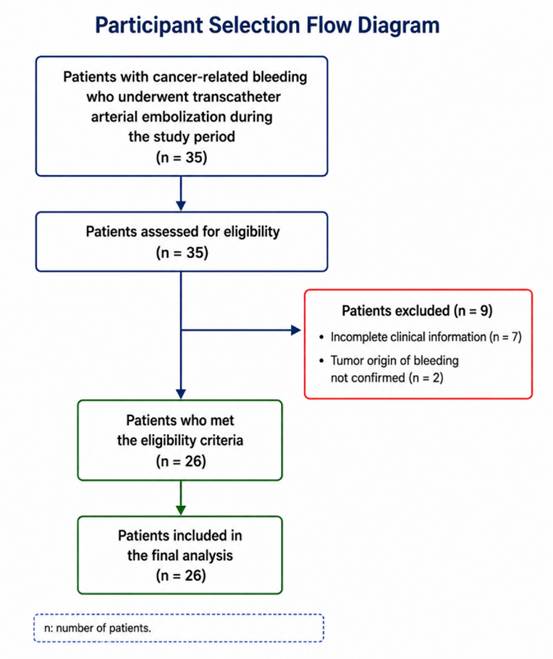
A total of 26 patients with cancer who presented with tumor-related hemorrhage and
underwent transcatheter arterial embolization were included. No missing data were
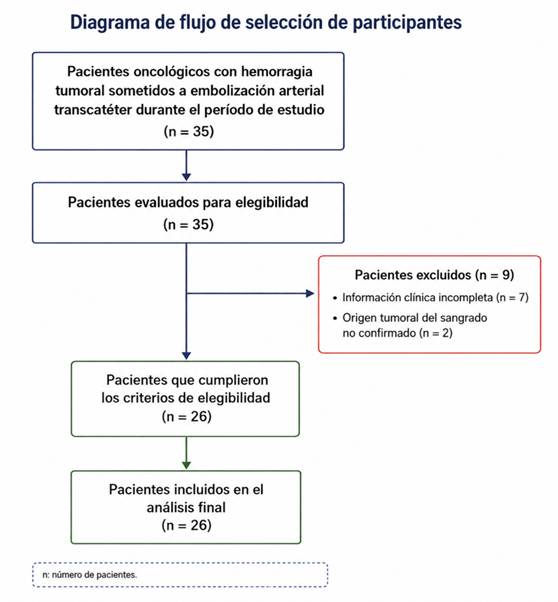
identified for the main variables analyzed. The patient identification, screening,
eligibility, and inclusion process is presented in Figure 1.
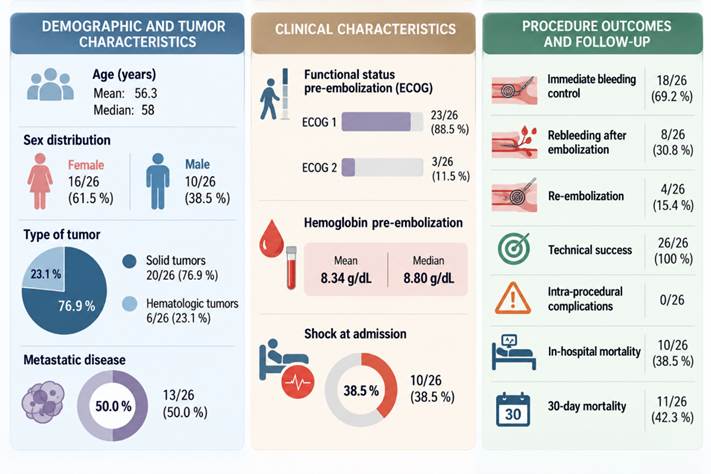
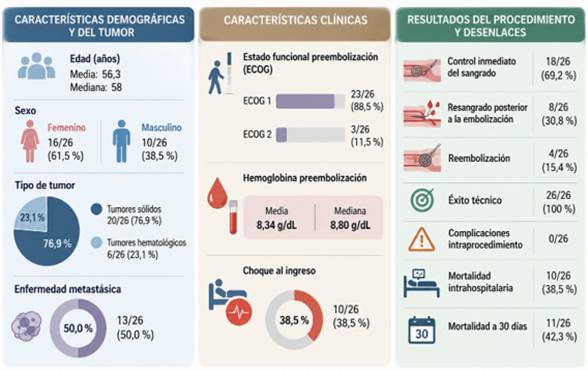
Figure 2 summarizes the demographic and clinical characteristics of the cohort, as well as
the main outcomes following transcatheter arterial embolization. Female patients with
solid tumors predominated in the cohort. Regarding pre-embolization performance status,
23 patients (88.5%) had an ECOG score of 1 and 3 (11.5%) had an ECOG score of 2. The
procedure achieved a technical success rate of 100%, with immediate bleeding control
in approximately seven out of ten patients and no intraprocedural complications.
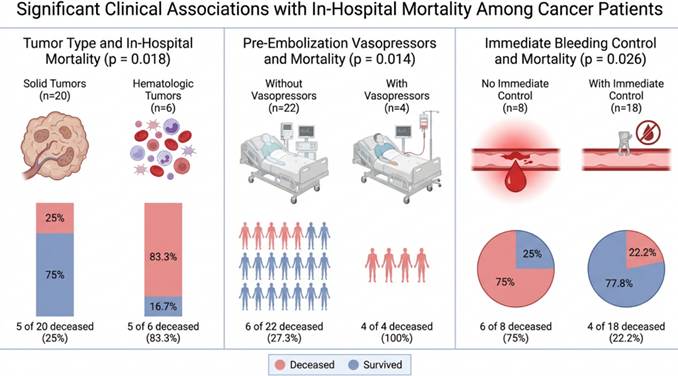
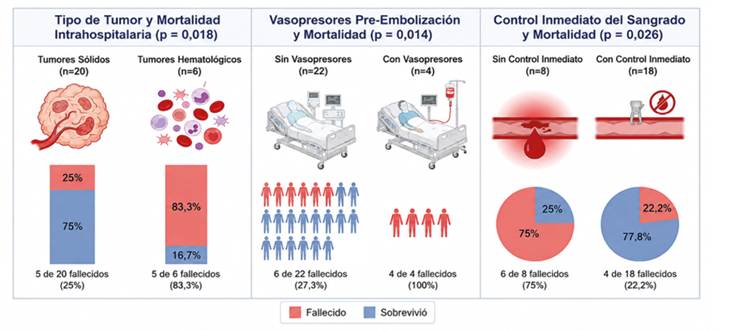
Figure 3 shows the association between different clinical variables and in-hospital mortality.
A higher frequency of mortality was observed among patients with hematologic malignancies,
those who required vasopressors before embolization, and those in whom immediate bleeding
control was not achieved.
Figure 1
Flow diagram of the participant selection process and exclusions leading to the final
study cohort (n = 26).
Source: Prepared by the authors based on the study data.
Figure 2
Clinical outcomes of embolization in 26 patients: demographic characteristics, tumor
types, post-embolization procedures, and follow-up.
Source: Prepared by the authors based on the study data.
Figure 3
Clinical variables associated with in-hospital mortality in patients with cancer and
tumor-related hemorrhage.
Source: Prepared by the authors based on the study data.
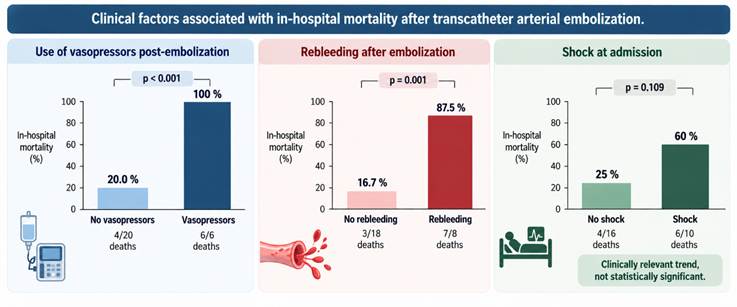
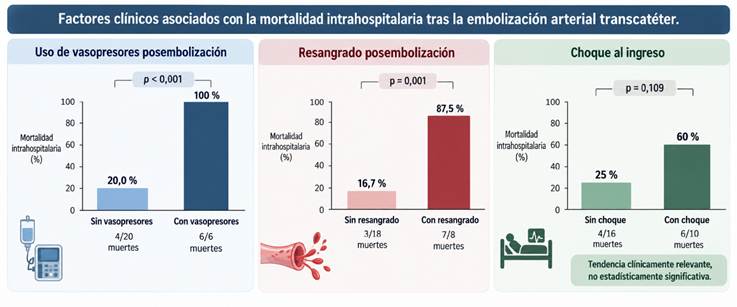
In the postprocedural period, mortality was higher among patients who presented rebleeding
(87.5% vs. 16.7%; p = 0.001) and among those who required vasopressors after embolization
(100% vs. 20.0%; p < 0.001). Although the difference did not reach statistical significance,
patients presenting with shock on admission had a higher proportion of in-hospital
mortality than those without shock (60% vs. 25%; p = 0.109) (See Figure 4).
Figure 4
Post-Procedural factors associated with mortality following embolization.
Source: Prepared by the authors based on the study data.
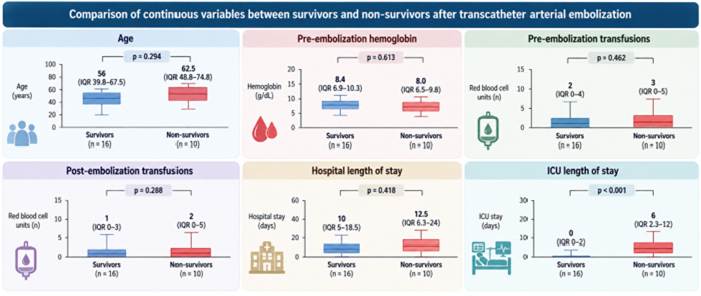
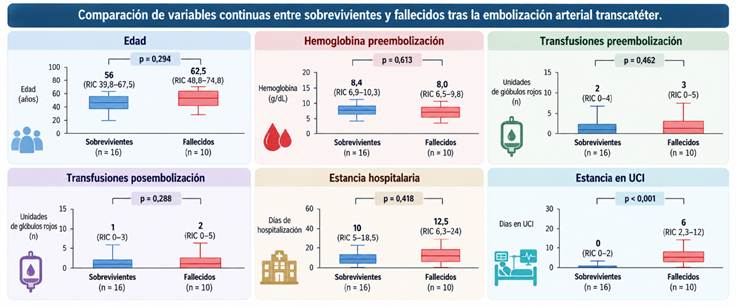
Patients who died had a longer median intensive care unit stay than survivors (6 vs.
0 days; p < 0.001). No statistically significant differences were observed between
survivors and patients who died in age (56 vs. 62.5 years; p = 0.294), pre-embolization
hemoglobin levels (8.4 vs. 8.0 g/dL; p = 0.613), pre-embolization transfusion requirements
(2 vs. 3 units; p = 0.462), post-embolization transfusion requirements (1 vs. 2 units;
p = 0.288), or total hospital stay (10 vs. 12.5 days; p = 0.418).
Figure 5
Comparison of Continuous Variables Between Survivors and Non-Survivors Following Transcatheter
Arterial Embolization
Source: Prepared by the authors based on the study data.
Regarding continuous variables, ICU length of stay was significantly longer among
patients who died than among survivors (median: 6 vs. 0 days; p < 0.001). No statistically
significant differences were observed between the two groups in age, pre-embolization
hemoglobin levels, pre- and post-embolization transfusion requirements, or hospital
length of stay (Figure 5).
4. Discussion
Tumor-related hemorrhage represents a clinically significant complication in patients
with cancer, particularly in those with advanced disease. In our cohort, a substantial
proportion of patients had metastatic disease and severe clinical conditions at admission,
including shock, reflecting the complexity of this population and consistent with
findings reported in the literature. In this context, transcatheter arterial embolization
has emerged as an effective therapeutic option for the management of tumor-related
hemorrhage.
In our series, technical success was achieved in 100% of patients, with immediate
bleeding control in 69.2%, findings consistent with those reported in the literature.
Previous studies, such as that by Park et al., have reported technical and clinical
success rates of 85% and 65%, respectively [8]. Similarly, other series involving urologic malignancies have reported comparable
outcomes, with high rates of technical and clinical success even in clinically complex
patients [9].
Available evidence indicates that transcatheter arterial embolization has a favorable
safety profile, with a low incidence of major complications and generally mild and
self-limiting adverse events. No intraprocedural complications were recorded in our
cohort, a finding consistent with previous reports. Taken together, these findings
support the safety of embolization as a therapeutic option for patients at high surgical
risk or with complex clinical conditions [6].
Several studies have shown that clinical success following embolization is associated
with improved short-term survival, suggesting that it may represent an important prognostic
indicator in patients with tumor-related hemorrhage. Consistent with these findings,
our results underscore the relevance of achieving early and effective bleeding control
as a determinant of clinical outcomes.
Similarly, Ushimaru et al. [2] compared radiotherapy and transcatheter arterial embolization in patients with advanced
gastric cancer and reported a higher rate of immediate hemostatic success with radiotherapy
(94.7% vs. 66.7%), although no significant differences in overall survival were observed
[2]. These findings suggest that, regardless of the therapeutic modality used, timely
control of hemorrhage represents one of the major determinants of prognosis in patients
with tumor-related bleeding [2].
Consistent with the above, the absence of immediate bleeding control in our cohort
was associated with higher in-hospital mortality, suggesting that the early clinical
response to the procedure may be related to subsequent prognosis, particularly in
patients with advanced disease and hemodynamic compromise [1].
The biological heterogeneity of tumors may influence the response to conventional
therapeutic strategies, reinforcing the need for individualized approaches [10]. In this context, transcatheter arterial embolization represents an alternative
within the comprehensive management of patients with cancer, particularly when other
therapeutic options are limited [11].
However, the clinical benefit of embolization should not be assessed solely on the
basis of immediate hemostasis, but also on its ability to provide sustained bleeding
control during follow-up. In patients with advanced cancer, persistent or recurrent
bleeding may once again compromise clinical stability and prevent continuation of
antineoplastic treatment. Therefore, the durability of bleeding control represents
a key component of the clinical effectiveness of embolization and an important objective
during follow-up [12].
Regarding postprocedural outcomes, rebleeding remains one of the main limitations
of arterial embolization, even when adequate initial bleeding control is achieved.
Previous studies have reported rebleeding rates of approximately 30-33% during follow-up
despite high rates of technical and clinical success [5]. In our cohort, the rebleeding rate was 30.8%, consistent with previous reports
and indicating that initial bleeding control does not necessarily ensure sustained
hemostasis.
Furthermore, several studies have identified factors associated with recurrent bleeding
and the need for reintervention, including tumor characteristics, persistent residual
vascularization, and post-embolization tumor volume [13]. In our cohort, 15.4% of patients required repeat embolization, indicating that,
in some cases, the initial procedure may not be sufficient to achieve definitive bleeding
control. These findings underscore the need for close follow-up and clinical and imaging
reassessment when recurrence is suspected.
The rebleeding observed in our cohort may be explained, at least in part, by the biological
and vascular complexity of advanced malignancies. The presence of multiple feeding
vessels, collateral circulation, and anatomical variations associated with tumor growth
may hinder the identification and complete occlusion of all bleeding sources. Recurrent
bleeding may also be influenced by tumor progression and previous oncologic treatments,
including chemotherapy- or radiotherapy-induced necrosis and ulceration. These mechanisms
highlight the multifactorial nature of rebleeding and may explain its occurrence despite
adequate initial technical success [14].
Transcatheter arterial embolization also has a role within the multidisciplinary management
of tumor-related hemorrhage, particularly in patients at high surgical risk or with
limited therapeutic alternatives [15].
Nevertheless, recurrent hemorrhage remains one of the major challenges following embolization.
Initial technical success does not always translate into sustained clinical control
because of factors such as the complexity of tumor vascularization, disease progression,
and the effects of previous oncologic treatments, highlighting the need for close
surveillance and follow-up [16].
Although transcatheter arterial embolization can provide adequate initial control
of tumor-related hemorrhage, subsequent clinical outcomes do not depend exclusively
on the technical success of the procedure. Our findings, consistent with the literature,
suggest that survival may also be related to progression of the underlying malignancy
and the patient’s baseline clinical condition at the time of bleeding. In this context,
embolization should primarily be regarded as a tool for clinical stabilization, as
technical success alone does not necessarily modify the prognosis of patients with
cancer.
Recurrent hemorrhage remains a challenge following embolization and may occur despite
adequate technical success. Therefore, close surveillance and early reassessment are
essential, particularly in patients with advanced disease and a high risk of rebleeding
[17].
Overall, our findings show a high rate of technical success and initial bleeding control
in a substantial proportion of patients undergoing transcatheter arterial embolization,
even in a population with considerable clinical complexity. However, the frequency
of rebleeding and the need for reintervention indicate that initial procedural success
does not always translate into sustained clinical benefit. Prognosis appears to be
related both to the early response to bleeding control and to baseline clinical and
oncologic severity, underscoring the importance of appropriate risk stratification
and close follow-up.
Future prospective, multicenter studies with larger sample sizes are needed to validate
these findings and more accurately determine the factors associated with mortality
and rebleeding in patients with cancer undergoing transcatheter arterial embolization.
Multivariable analyses will also be important to assess the influence of clinical,
tumor-related, and procedure-related variables on outcomes and to identify predictive
factors that may help select patients most likely to achieve sustained clinical benefit.
5. Conclusions
Transcatheter arterial embolization represents an effective strategy for controlling
tumor-related hemorrhage in patients with cancer, achieving a high technical success
rate and adequate initial bleeding control, even among patients with advanced disease
and substantial clinical complexity. However, rebleeding remains an important limitation
and was associated with higher mortality, highlighting the importance of close follow-up
after the procedure.
Our findings indicate that the prognosis of patients with tumor-related hemorrhage
depends not only on the technical success of embolization but also on baseline clinical
severity and the early response to treatment. In this context, early and sustained
bleeding control represents a key therapeutic goal for optimizing clinical outcomes.
These results characterize the clinical outcomes observed following transcatheter
arterial embolization in patients with cancer and tumor-related hemorrhage and highlight
the influence of baseline clinical status and bleeding control on subsequent outcomes.
1. Introducción
El sangrado constituye una complicación frecuente y clínicamente relevante en pacientes
con cáncer, con una incidencia aproximada del 10 % a lo largo de la evolución de la
enfermedad. Su presentación es heterogénea y puede oscilar desde episodios leves hasta
hemorragias mayores potencialmente fatales, con repercusiones significativas sobre
la estabilidad hemodinámica, los requerimientos transfusionales y la continuidad del
tratamiento oncológico [1]. Además, los episodios hemorrágicos se asocian con un peor pronóstico, un deterioro
de la calidad de vida y una interrupción de las terapias antineoplásicas, factores
que contribuyen al incremento de la morbimortalidad en esta población [2].
La invasión, ulceración y erosión tumoral de estructuras vasculares favorecen episodios
hemorrágicos persistentes o recurrentes, que pueden ocasionar inestabilidad hemodinámica,
retrasar la continuidad del tratamiento oncológico e incrementar el riesgo de mortalidad
[3]. No obstante, el origen del sangrado en el paciente oncológico es multifactorial.
Además de la progresión tumoral, puede estar relacionado con procedimientos diagnósticos
o terapéuticos, incluidos los procedimientos invasivos, la radioterapia y los tratamientos
sistémicos. Asimismo, condiciones concomitantes como la trombocitopenia, la disfunción
hepática y el uso de anticoagulantes pueden favorecer su aparición, sobre todo en
pacientes con neoplasias hematológicas y enfermedad avanzada [1].
La fisiopatología del sangrado relacionado con el cáncer resulta de la interacción
de mecanismos locales y sistémicos. La invasión tumoral de estructuras vasculares,
la erosión de la pared vascular, la compresión extrínseca de los vasos y el desarrollo
de una neovascularización anómala favorecen la aparición de hemorragia. Asimismo,
la necrosis tumoral, espontánea o inducida por el tratamiento oncológico, puede incrementar
el riesgo hemorrágico. A estos mecanismos se suman factores relacionados con el tratamiento,
como la cirugía, las biopsias, los procedimientos ablativos, la radioterapia y el
uso de agentes antiangiogénicos o anticoagulantes; además de alteraciones hematológicas
frecuentes, entre ellas la trombocitopenia y las coagulopatías asociadas al cáncer
[4].
En consecuencia, el manejo del sangrado en pacientes oncológicos representa un desafío
clínico, sobre todo en aquellos con enfermedad avanzada, múltiples líneas de tratamiento
o comorbilidades significativas. Aunque el tratamiento médico, la radioterapia y la
cirugía continúan siendo opciones terapéuticas fundamentales, su aplicación puede
verse limitada por el estado clínico del paciente, la localización del sangrado o
la extensión de la enfermedad. En este contexto, la embolización arterial transcatéter
se ha consolidado como una alternativa mínimamente invasiva y eficaz para el control
de hemorragias persistentes o refractarias, particularmente cuando otras modalidades
terapéuticas han fracasado o no son factibles [5].
La embolización arterial transcatéter es un procedimiento diagnóstico y terapéutico
guiado por angiografía que permite identificar y ocluir el vaso responsable del sangrado.
Puede realizarse de forma selectiva cuando existe evidencia angiográfica de sangrado
activo o de manera empírica con base en los hallazgos clínicos, endoscópicos o tomográficos,
lo que constituye una opción especialmente útil en pacientes con enfermedad avanzada,
fracaso de la hemostasia convencional o inestabilidad hemodinámica [3].
Diversas series han demostrado elevadas tasas de éxito técnico y clínico, con un perfil
de seguridad favorable y una baja incidencia de complicaciones mayores, incluso en
pacientes con múltiples comorbilidades o bajo tratamiento antitrombótico. La posibilidad
de realizar el procedimiento con anestesia local y dentro de un abordaje multidisciplinario
ha favorecido su incorporación progresiva al manejo de las hemorragias asociadas al
cáncer [6].
A pesar de estos resultados alentadores, la evidencia disponible continúa siendo heterogénea.
Estudios previos han descrito variaciones importantes en las tasas de éxito clínico,
resangrado y mortalidad, probablemente relacionadas con el tipo de neoplasia, la extensión
de la enfermedad, la condición clínica basal y la presencia de factores pronósticos,
como el estado de choque, la carga tumoral y las comorbilidades asociadas. En este
contexto, resulta necesario generar evidencia adicional que permita caracterizar con
mayor precisión los resultados clínicos y los factores pronósticos en pacientes oncológicos
sometidos a embolización por hemorragia tumoral [7].
En este contexto, el presente estudio tuvo como objetivo describir los desenlaces
clínicos e identificar los factores asociados con la mortalidad intrahospitalaria
en pacientes oncológicos con hemorragia tumoral tratados mediante embolización arterial
transcatéter con coils.
2. Materiales y métodos
Se realizó un estudio observacional, analítico y de cohorte retrospectiva, basado
en la revisión de registros clínicos de pacientes oncológicos con hemorragia tumoral
tratados mediante embolización arterial transcatéter en SOLCA Guayaquil, entre marzo
y noviembre de 2025.
Se incluyeron pacientes adultos con diagnóstico de enfermedad oncológica que presentaron
sangrado atribuible a la patología tumoral y fueron sometidos a embolización durante
el periodo de estudio. Se excluyeron aquellos con información incompleta en las variables
principales o en quienes no fue posible confirmar el origen tumoral del sangrado.
Dado el diseño retrospectivo del estudio, no se realizó un cálculo del tamaño muestral.
Se incluyó la totalidad de los pacientes que cumplieron los criterios de elegibilidad
durante el periodo establecido, con lo que se obtuvo una muestra final de 26 pacientes.
Se recolectaron variables demográficas, clínicas, relacionadas con el procedimiento
y de desenlace, seleccionadas con base en su relevancia clínica. Las variables clínicas
incluyeron el tipo de tumor, la presencia de enfermedad metastásica, el estado funcional
según la escala del Eastern Cooperative Oncology Group (ECOG), la presencia de choque
al ingreso, los niveles de hemoglobina preembolización, los requerimientos transfusionales
y el uso de vasopresores antes de la embolización.
Las variables relacionadas con el procedimiento incluyeron el éxito técnico, las complicaciones
intraprocedimiento y el control inmediato del sangrado. Las variables de seguimiento
incluyeron el resangrado posterior a la embolización, la necesidad de reembolización,
el uso de vasopresores después del procedimiento, la duración de la estancia hospitalaria
y la estancia en la unidad de cuidados críticos. Las variables de desenlace incluyeron
la mortalidad intrahospitalaria y la mortalidad a 30 días.
El éxito técnico se definió como la oclusión angiográfica efectiva del vaso responsable
del sangrado o la ausencia de extravasación al finalizar el procedimiento. El control
inmediato del sangrado se definió como la ausencia de recurrencia clínica en el periodo
inmediato posterior a la embolización.
Los procedimientos de embolización fueron realizados por el equipo de radiología intervencionista
mediante angiografía, con identificación del territorio vascular responsable de la
hemorragia y cateterización selectiva o superselectiva del vaso diana. En todos los
procedimientos se utilizaron coils como agente embólico. La selección del tamaño y
sitio de colocación de los coils se individualizó de acuerdo con el calibre del vaso,
la anatomía vascular y las características angiográficas del sangrado, a criterio
del radiólogo intervencionista.
El análisis estadístico incluyó estadística descriptiva mediante frecuencias absolutas
y relativas para variables categóricas, y medidas de tendencia central y dispersión
para variables continuas, utilizando media y desviación estándar o mediana y rango
intercuartílico según su distribución. Para el análisis comparativo, las variables
categóricas se evaluaron mediante la prueba exacta de Fisher y las variables continuas
mediante la prueba U de Mann-Whitney.
Las covariables se seleccionaron por su relevancia clínica, entre ellas el tipo de
tumor, la presencia de choque al ingreso, el control del sangrado, los requerimientos
transfusionales y el uso de vasopresores. Debido al reducido tamaño muestral y al
bajo número de eventos (mortalidad intrahospitalaria), no se realizaron modelos multivariables
para evitar sobreajuste e inestabilidad en las estimaciones. Por ello, el análisis
se limitó a estadística descriptiva y análisis bivariado.
Los datos faltantes se manejaron mediante análisis de casos completos, sin imputación.
Se consideró un valor de p < 0,05 como estadísticamente significativo. El análisis
se realizó utilizando el software IBM SPSS Statistics versión 26 (IBM Corp., Armonk,
NY, USA).
Dado el diseño retrospectivo, se reconocen posibles sesgos de selección e información,
propios de la revisión de registros clínicos. Para minimizarlos, se definieron previamente
las variables y se realizó una recolección sistemática de los datos.
El estudio fue aprobado por el Comité de Ética de la Universidad de Especialidades
Espíritu Santo. Se garantizó en todo momento la confidencialidad y anonimización de
la información, de conformidad con los principios éticos establecidos en la Declaración
de Helsinki y las normativas nacionales vigentes para la investigación en seres humanos.
3. Resultados
Se incluyó un total de 26 pacientes con diagnóstico de enfermedad oncológica que presentaron
hemorragia tumoral y fueron sometidos a embolización arterial transcatéter, sin registrarse
pérdidas de información en las variables principales analizadas. El proceso de identificación,
evaluación, elegibilidad e inclusión de los pacientes se presenta en la Figura 1.
La Figura 2 resume las características demográficas y clínicas de la cohorte, así como los principales
desenlaces posteriores a la embolización arterial transcatéter. Predominaron las pacientes
de sexo femenino y los tumores sólidos. En cuanto al estado funcional preembolización,
23 pacientes (88,5 %) presentaron ECOG 1 y 3 (11,5 %) ECOG 2. El procedimiento alcanzó
una tasa de éxito técnico del 100 %, con control inmediato del sangrado en aproximadamente
siete de cada diez pacientes y sin complicaciones intraprocedimiento.
La Figura 3 muestra la asociación entre distintas variables clínicas y la mortalidad intrahospitalaria.
Se observó una mayor frecuencia de mortalidad en pacientes con neoplasias hematológicas,
en aquellos que requirieron vasopresores antes de la embolización y en quienes no
se logró control inmediato del sangrado.
Figura 1
Diagrama de flujo del proceso de selección de los participantes y de las exclusiones
realizadas hasta la conformación de la cohorte final de estudio (n = 26).
Fuente: Elaboración propia a partir de los datos del estudio
Figura 2
Resultados clínicos de la embolización en 26 pacientes: datos demográficos, tipos
de tumores, procedimientos postembolización y seguimiento.
Fuente: Elaboración propia a partir de los datos del estudio
Figura 3
Variables clínicas asociadas con la mortalidad intrahospitalaria en pacientes con
cáncer y hemorragia tumoral.
Fuente: Elaboración propia a partir de los datos del estudio
En el periodo posterior al procedimiento, la mortalidad fue mayor en pacientes que
desarrollaron resangrado (87,5 % vs. 16,7 %; p = 0,001) y en aquellos que requirieron
vasopresores después de la embolización (100 % vs. 20,0 %; p < 0,001). Aunque sin
alcanzar significación estadística, los pacientes con choque al ingreso presentaron
una mayor proporción de mortalidad intrahospitalaria en comparación con aquellos sin
choque (60 % vs. 25 %; p = 0,109) (ver Figura 4).
Figura 4
Factores clínicos asociados con la mortalidad intrahospitalaria tras la embolización
arterial transcatéter.
Fuente: Elaboración propia a partir de los datos del estudio
Los pacientes que fallecieron presentaron una mayor mediana de estancia en UCI que
los sobrevivientes (6 vs. 0 días; p < 0,001). No se observaron diferencias estadísticamente
significativas entre los sobrevivientes y los pacientes fallecidos en la edad (56
vs. 62,5 años; p = 0,294), los niveles de hemoglobina preembolización (8,4 vs. 8,0
g/dL; p = 0,613), los requerimientos transfusionales preembolización (2 vs. 3 unidades;
p = 0,462), los requerimientos transfusionales posembolización (1 vs. 2 unidades;
p = 0,288) ni la estancia hospitalaria total (10 vs. 12,5 días; p = 0,418).
Figura 5
Comparación de variables continuas entre sobrevivientes y fallecidos tras embolización
arterial transcatéter.
Fuente: Elaboración propia a partir delos datos del estudio
En cuanto a las variables continuas, la estancia en UCI fue significativamente mayor
en los pacientes fallecidos que en los sobrevivientes (mediana: 6 vs. 0 días; p <
0,001). No se observaron diferencias estadísticamente significativas entre ambos grupos
en la edad, la hemoglobina preembolización, los requerimientos transfusionales pre
y posembolización ni en la estancia hospitalaria (Figura 5).
4. Discusión
El sangrado tumoral representa una complicación clínicamente relevante en pacientes
con cáncer, especialmente en aquellos con enfermedad avanzada. En esta cohorte, una
proporción importante de los pacientes presentaba enfermedad metastásica y condiciones
clínicas graves al ingreso, incluido estado de choque, hallazgos que reflejan la complejidad
de esta población. En este contexto, la embolización arterial transcatéter ha emergido
como una herramienta terapéutica eficaz dentro del manejo del sangrado tumoral.
En esta serie se alcanzó una tasa de éxito técnico del 100 % y un control inmediato
del sangrado del 69,2 %, resultados que son consistentes con lo reportado en la literatura.
Estudios previos, como el de Park et al. [8], han descrito tasas de éxito técnico y clínico del 85 y 65 %, respectivamente. De
manera similar, otras series en neoplasias urológicas han reportado resultados comparables,
con elevados niveles de eficacia técnica y clínica, incluso en pacientes con alta
complejidad [9].
La evidencia disponible demuestra que la embolización arterial transcatéter presenta
un perfil de seguridad favorable, con una baja incidencia de complicaciones mayores
y efectos adversos generalmente leves y autolimitados. En la cohorte de este estudio
no se registraron complicaciones intraprocedimiento, hallazgo concordante con lo descrito
en la literatura. En conjunto, estos resultados respaldan la seguridad de la embolización
como alternativa terapéutica en pacientes con alto riesgo quirúrgico o condiciones
clínicas complejas [6].
La embolización se asocia con una mejor supervivencia a corto plazo, por lo que constituye
un importante indicador pronóstico en pacientes con hemorragia tumoral. En concordancia
con estos hallazgos, los resultados de este estudio refuerzan la relevancia de lograr
un control precoz y efectivo del sangrado como un determinante de la evolución clínica.
De manera consistente, Ushimaru et al. [2] compararon la radioterapia y la embolización arterial transcatéter en pacientes
con cáncer gástrico avanzado y observaron una mayor tasa de éxito hemostático inmediato
con radioterapia (94,7 % vs. 66,7 %), aunque sin diferencias significativas en la
supervivencia global. Estos resultados sugieren que, independientemente de la modalidad
terapéutica empleada, el control oportuno de la hemorragia constituye uno de los principales
determinantes del pronóstico en pacientes con sangrado tumoral [2].
En línea con lo anterior, en esta cohorte la ausencia de control inmediato del sangrado
se asoció con una mayor mortalidad intrahospitalaria, lo que sugiere que la respuesta
clínica temprana al procedimiento podría estar relacionada con el pronóstico posterior,
particularmente en pacientes con enfermedad avanzada y compromiso hemodinámico [1].
La heterogeneidad biológica de los tumores puede condicionar la respuesta a las estrategias
terapéuticas convencionales, lo que refuerza la necesidad de enfoques individualizados
[10]. En este contexto, la embolización arterial transcatéter constituye una alternativa
dentro del manejo integral del paciente oncológico, particularmente cuando existen
limitaciones para otras opciones terapéuticas [11].
No obstante, el beneficio clínico de la embolización no debe valorarse únicamente
por la obtención de una hemostasia inmediata, sino también por la capacidad de mantener
un control hemorrágico sostenido durante el seguimiento. En pacientes con enfermedad
oncológica avanzada, la persistencia o recurrencia del sangrado puede comprometer
nuevamente la estabilidad clínica e impedir la continuidad del tratamiento antineoplásico.
Por ello, la durabilidad del control hemorrágico constituye un componente fundamental
de la eficacia clínica de la embolización y un objetivo relevante en el seguimiento
de estos pacientes [12].
En relación con los desenlaces posteriores al procedimiento, el resangrado continúa
siendo una de las principales limitaciones de la embolización arterial, aun cuando
se alcanza un adecuado control inicial de la hemorragia. Estudios previos han reportado
tasas de resangrado cercanas al 30-33 % durante el seguimiento, a pesar de elevadas
tasas de éxito técnico y clínico [5]. En esta cohorte, la tasa de resangrado fue del 30,8 %, hallazgo concordante con
lo descrito en la literatura y que evidencia que el control inicial de la hemorragia
no necesariamente garantiza un control hemorrágico sostenido.
Asimismo, diversos estudios han identificado factores asociados a la recurrencia del
sangrado y a la necesidad de reintervención, incluyendo características tumorales,
persistencia de vascularización residual y volumen tumoral postembolización [13]. En esta cohorte, el 15,4 % de los pacientes requirió reembolización, lo que evidencia
que, en una proporción de casos, el procedimiento inicial puede no ser suficiente
para lograr un control hemorrágico definitivo. Estos hallazgos respaldan la necesidad
de un seguimiento estrecho y de una reevaluación clínica e imagenológica ante la sospecha
de recurrencia.
El resangrado observado en esta cohorte puede explicarse, al menos en parte, por la
complejidad biológica y vascular de las neoplasias avanzadas. La presencia de múltiples
vasos nutricios, circulación colateral y variaciones anatómicas asociadas al crecimiento
tumoral puede dificultar la identificación y oclusión completa de las fuentes hemorrágicas.
Asimismo, la recurrencia del sangrado puede estar influida por la progresión tumoral
y los tratamientos oncológicos previos, incluida la necrosis y ulceración inducidas
por quimioterapia o radioterapia. Estos mecanismos ponen de manifiesto el carácter
multifactorial del resangrado y pueden explicar su aparición a pesar de un adecuado
éxito técnico inicial [14].
La embolización arterial transcatéter también desempeña un papel dentro del abordaje
multidisciplinario de la hemorragia tumoral, particularmente en pacientes con elevado
riesgo quirúrgico o con alternativas terapéuticas limitadas [15].
No obstante, la evolución clínica y la supervivencia de estos pacientes pueden estar
relacionadas no solo con el éxito técnico del procedimiento, sino también con la progresión
de la enfermedad oncológica subyacente y la condición clínica basal al momento del
sangrado [16].
Aunque la embolización arterial transcatéter permite un adecuado control inicial de
la hemorragia tumoral, el éxito técnico no siempre se traduce en un control clínico
sostenido. Esta diferencia entre éxito técnico y respuesta clínica también ha sido
descrita en otras series de embolización por sangrado asociado a neoplasias [17]. En nuestra cohorte, a pesar de alcanzarse un éxito técnico del 100 %, el control
inmediato del sangrado fue del 69,2 % y el 30,8 % de los pacientes presentó resangrado.
Estos hallazgos ponen de manifiesto la importancia de diferenciar el éxito técnico
del control clínico de la hemorragia y respaldan la necesidad de vigilancia posterior
al procedimiento.
Futuros estudios prospectivos y multicéntricos, con muestras de mayor tamaño, permitirán
validar estos hallazgos y determinar con mayor precisión los factores asociados a
la mortalidad y al resangrado en pacientes oncológicos sometidos a embolización arterial
transcatéter. Asimismo, será relevante evaluar mediante análisis multivariados la
influencia de variables clínicas, tumorales y relacionadas con el procedimiento sobre
los desenlaces, así como identificar factores predictivos que permitan seleccionar
a los pacientes con mayor probabilidad de obtener un beneficio clínico sostenido.
5. Conclusiones
La embolización arterial transcatéter constituye una estrategia eficaz para el control
de la hemorragia tumoral en pacientes oncológicos, que alcanza una elevada tasa de
éxito técnico y un adecuado control inicial del sangrado, incluso en pacientes con
enfermedad avanzada y alta complejidad clínica. Sin embargo, el resangrado continúa
siendo una limitación relevante y se asoció con una mayor mortalidad, lo que pone
de manifiesto la importancia de un seguimiento estrecho tras el procedimiento.
Los hallazgos de este estudio indican que el pronóstico de los pacientes con hemorragia
tumoral depende no solo del éxito técnico de la embolización, sino también de la gravedad
clínica basal y de la respuesta temprana al tratamiento. En este contexto, el control
precoz y sostenido de la hemorragia constituye un objetivo fundamental para optimizar
la evolución clínica. Estos resultados permiten caracterizar los desenlaces clínicos
observados tras la embolización arterial transcatéter en pacientes oncológicos con
hemorragia tumoral y ponen de manifiesto la influencia de la condición clínica basal
y del control hemorrágico sobre su evolución posterior.